The Main Parts of the Treaty of Versailles Included:

1. Lost Land:

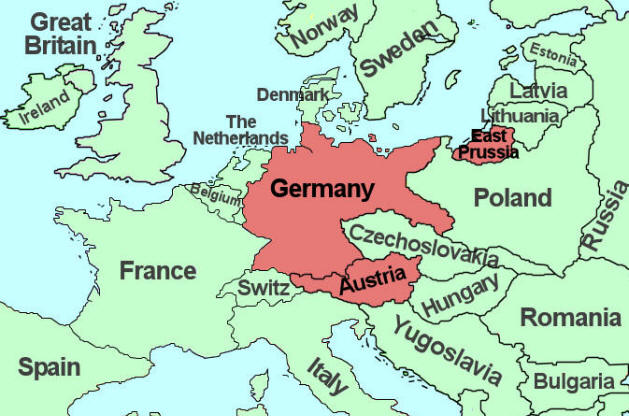
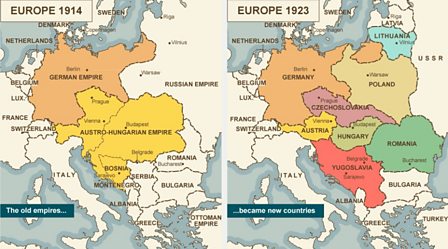
Through the creation of other countries by the Allies, many Germans were divided into countries that used to be their own. This created unsettlement because people want to be part of country with their own ethnic people. The main ones were Poland with the Polish Corridor, which divided Germany into 2 pieces, majorly weakening its ability to communicate between the two areas. Moreover, it elevated Poland's status as it now had access to the sea. The other prominent one in continental Europe was the Sudetenland, which consisted of many ethnic Germans. This area became part of Czechoslovakia. Finally, the colonies that Germany had spent the last half century taking were now all given to the Allied powers. Although this wasn't as harmful as the continental lands, any land being taken was hurtful. This link describes specifically what lands were taken within the whole of the treaty.
2. Demilitarization of the Rhineland; Limiting the Army and the Ban of a Naval/Air Force

The Rhineland is the area between Germany and France. As most of the war on the West occured in France, they wanted a buffer zone that would hopefully prevent Germany from invading again. Along with having no military presence, the Allies would occupy troops for 11 years. Moreover, France was given a coal mine for 15 years. At the end of those 15 years, the citizens of the area could vote to be given back to Germany or be annexed into France. This was because France had expended many resources, especially coal and iron, during the war and needed a way to refuel back. As we can see on the right, the Rhineland encompasses a great amount of territory. In fact, this area borders the Rhine River (giving its name) and wanted to be used by many French leaders as a natural border against Germany. It was through the Rhineland that Hitler would invade through Belgium and France, leading to the very quick fall of France. As the Allies didn't want to fear with Germany's armed forces, especially rivaling those of the US and Great Britain, they tried to make sure that Germany's military wouldn't be too large. Moreover, the US would maintain a monopoly over the air and seas, being the strongest country militarily at this point. This link explains how and why it was remilizarized

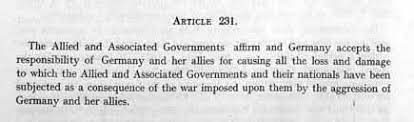
3. Article 231: War Guilt Clause

This is perhaps the harshest part of the treaty: making Germany accept full blame for the war. However, this particularly caused anger because Germany were certainly not the instigators of the war. As the war began with the assassination of Archduke Franz Ferdinand and the July Crisis (where an ultimatum by Austria-Hungary was sent to Serbia and apologize), it can be concluded that either the Serbian government (who may have been part of the terrorist organization that murdered the archduke) or the Austro-Hungarian (who made the first declaration of war and an ultimatum that they knew Serbia was not going to accept).Link on the War Guilt Clause

4. No Anschluss

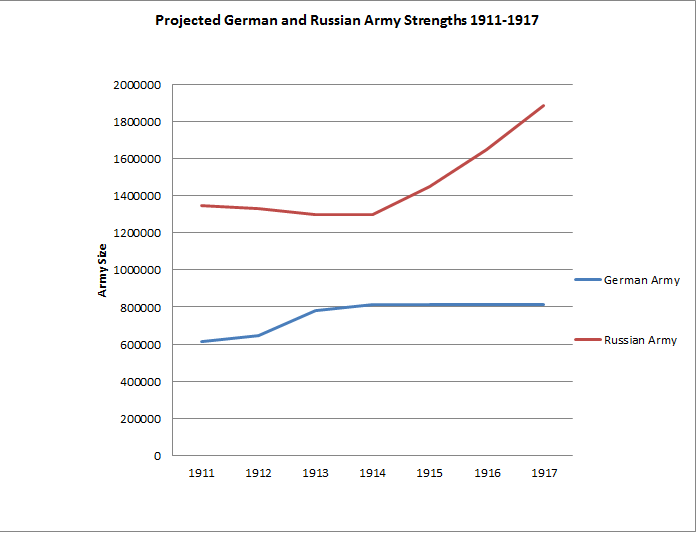
This ban of unification between Germany and Austria was not only a military one but a nationalistic one. Hitler was Austrian and was readily allowed to walk into the Austrian borders and annex their country. 99% of Austrians voted for Anschluss but it was heavily swayed because voting wasn't private or anonymous. Regarding the military aspect, more troops under Germany's rule means an easier time fighting its enemies. Hitler knew that he would plan on invading the Soviet Union, which was known for its large population, so needed a large amount of troops himself (along with having room for Germans, which was conquering the world in disguise). Although the Allies' fear was warranted, the Austro-Hungarians did fairly poorly during WWI and had to constantly be bailed out by Germany. Anschluss began in March 1938, pretty close to the start of WWII. The only country to oppose Anschluss was Mexico (it had no fear of speaking out since Germany wouldn't be targeting it) at the Leauge of Nations, which will be explained below. As I will discuss later, the European employed the policy of Appeasement towards Germany, thus allowing Anschluss to happen. Link on the beginning of Anschluss

Why was this a cause?

Though there is a common argument that the treaty was particularly harsh, which is a viewed particulalry shared by the Germans, it actually wasn't that harsh as seen by the Treaty of Brest-Litovsk, which Germany forced Russia to sign to leave the war. In this treaty, it essentially took away most of Western Russia away, which contained many important cities and industrialized areas. Moreover, both the Austrians and Ottomans were completely broken apart during these treaties. The League of Nations, which was an international body that hoped to avoid war (similar to the United Nations today), completely failed because there was no military backing it had. The most that it could do if a country did something bad is condemn them and kick them out of the League. Both of these did not deter anybody so countries could just do whatever they wanted. They essentially tried to stop war by saying "please".